

Positive Psychology

Scanxiety – Phases, Symptoms, and Coping with it

Scanxiety – Definition, Phases, symptoms, and learning how Coping with it The stress is real What is Scanxiety? For individuals diagnosed with cancer, you may be asked to do imaging scans as part of your cancer treatment to determine the effectiveness of your treatment plan, whether they are being done for diagnosis, to track treatment progress, or to screen for a recurrence. It can be challenging to manage. These scans help your care team determine if they should change or alter your treatment plan. Scanxiety is a term used to describe the feeling of anxiety or fear experienced by individuals who are awaiting the results of a medical scan or imaging test, such as a MRI or CT scan. The term is a combination of the words “scan” and “anxiety.” The anxiety associated with scanxiety can be caused by a number of factors, including the fear of receiving a diagnosis of a serious illness, uncertainty about the outcome of the test, and concerns about the discomfort or invasiveness of the procedure. For individuals who have previously undergone treatment for a serious illness, scanxiety can be particularly intense, as they may be anxious about the possibility of a recurrence or the need for further treatment. Scanxiety is a common experience among individuals who undergo medical testing, and can be difficult to manage. Some strategies that may help alleviate scanxiety include mindfulness techniques, distraction, talking to friends or family members about your concerns, and seeking support from a therapist or counselor. Phases of Scanxiety? Having imaging scans can cause a wide range of emotions. Feeling stress and worries during the scans is a common response. These feelings are common during these three phases, “before the scan,” “during the scan”, and “waiting for the scan results”.  To be more precise, here are some common phases that individuals with scanxiety may experience: Pre-Test Anxiety (before & during scans): This phase occurs before the medical test and can be characterized by nervousness, worry, and fear of the unknown. Individuals may worry about the test results, the procedure itself, or the possible implications of the results. Before your scans, if you experience scanxiety, you could get anxious and stressed as soon as it is scheduled. The days before your scan could be stressful for you. You may feel anxious getting ready for your appointment on the day of your scan. These feelings of anxiety and worries may occur in the waiting area or on the drive to your hospital. You may feel uneasy within the scanner during the process if you have scan anxieties. Some scanners have a tight, limited interior. You might experience fear or a sense of being trapped. The unpleasant noises the scanner generates may also make you nervous. Some scanning tables do not have cushions and are usually hard and cold. It could be unpleasant lying on them. Furthermore, you may find it challenging to remain still in one posture for a lengthy period. Waiting Period Anxiety (after scans): This phase occurs after the test has been conducted, and individuals are waiting for the results. This phase can be particularly difficult because of the uncertainty and the lack of control over the situation. During this phase, individuals may experience increased anxiety, stress, and difficulty sleeping or focusing. Most cancer patients get scanxiety after a scan while you await the results. You may keep thinking the same nervous thoughts repeatedly. The waiting may be stressful if it takes longer than expected to get your results. It could also trigger unpleasant recollections of disappointing scan results, and that reminder can increase feelings of anxiety, helplessness, and insecurities. Post-Test Anxiety: This phase occurs after the results have been received, and individuals may experience anxiety and fear related to the test results. Depending on the results, individuals may experience relief or additional anxiety and stress, and may need to undergo further testing or treatment. Coping and Recovery: This phase involves managing the anxiety and stress associated with the test results and seeking support from loved ones or medical professionals. Coping strategies may include mindfulness techniques, therapy, or lifestyle changes. It is important to note that not everyone will experience all of these phases, and the intensity and duration of each phase may vary from person to person. Seeking support and practicing self-care during these phases can help individuals manage their scanxiety and improve their overall well-being. Whether you like it or not, Scanxiety is real ! ( Joseph L. Wong ) SCANXIETY How to manage scanxiety? Talking about how you feel is the first step in treating your scanxiety. Those in your family and circle of friends might be anxious. You and they both might find comfort in talking to each other. Your Clinical care team can also provide you comfort, assistance, and direction. Informing them about your feelings and those of your loved ones is always a good idea. There are several things you may do to manage your scanxiety before, during, and after your scan. Try out these coping strategies to see what works best for you. There is no right or wrong method to manage your scanxiety. Before the scan: If possible, schedule your scan during early morning. If you get your scan earlier in the day, you might not have to wait too long. As a result, you will have scanxiety less frequently. Make a list of queries to ask your care provider, the following are some relevant questions: What must I do in order to prepare for the scan? Who should I contact if I’m still waiting for my results? What would happen during the scan? When will the scan be finished? What are the following steps if the scan indicates that my medication is not working? How do I receive my results? When will I receive my results? Talk to your healthcare provider about your concerns, make your appointment a week earlier so that you have sufficient time to ask more and give them the time to help you plan ways

Reaching new levels of relaxation using guided imagery – for stress and anxiety

Reaching new levels of relaxation using guided imagery – for stress and anxiety The stress-reduction technique What is guided imagery? Guided imaging (also known as guided meditation, visualisation, mental rehearsal, and guided self-hypnosis) is a method that concentrates the mind in proactive, constructive ways. It may be as easy as a 5-second pause before jumping from the diving board, during which the athlete visualises how a great dive feels while slashing through the water. Or it may be as calming as visualising building a campfire while camping in the woods. Although visualising has been referred to as mental rehearsal and mental imagery, these labels are misleading. Guided imagery engages all the senses, not just the visual sense, which is advantageous since only 55% of the population is firmly wired visually, and it is experienced throughout the whole body, not just the mind. Also, it is sometimes referred to as self-hypnosis since it induces a hypnotic state of mind. Guided imagery is considered meditation, and many may use the terms interchangeably. This approach is very democratic in that it is accessible to almost everyone. It is an inclusive resource that transcends inequalities in education, class, colour, gender, vitality, culture, and age.  Guided imagery in clinical terms In clinical terms, Guided imagery, also known as Guided Affective Imagery or (KIP) Katathym-imaginative Psychotherapy, is a form of mind-body intervention in which a trained practitioner or therapist assists a participant or patient in evoking and generating mental images that simulate or recreate the sensory perception. Sensory includes sights, sounds, tastes, smells, movements, and images associated with touches, such as texture, temperature, pressure, and imaginative or mental content that the participant chooses. Guided imagery may be done either one-on-one or in a group setting, with the practitioner or therapist acting as facilitator. Alternatively, the participant or patient may follow the instructions presented through a video, audio recording, or other audiovisual material that includes spoken instruction that may be accompanied by music or sound effects. Both voluntary and involuntary processes can cause mental imagery. It is a simulation or recreation of perceptual experience across all sensory modalities, including olfactory imagery, gustatory imagery, haptic imagery, and motor imagery. However, visual and auditory mental pictures are considered the most often experienced by individuals in everyday life and controlled studies, with visual imagery being the most well-explored and recorded in scientific literature. In experimental and cognitive psychology, researchers have primarily focused on voluntarily and purposefully created imagery, which the participant or patient develops, inspects, and changes, such as by invoking imagery of a scary social occasion and changing it into pictures indicative of a pleasurable and affirming experience. In psychopathology, clinicians have usually focused on images that “come to mind” on their own. For example, a depressed person may have unwanted negative images that show sadness, hopelessness, and morbidity. Or, someone with posttraumatic stress disorder may have images that remind them of past upsetting events. In clinical practice and psychopathology, unwanted and unasked-for mental images that “hijack attention” in some way are called intrusive. The persistence or “keeping in mind” of imagery, whether intentional or involuntary, involves significant demands on cognitive attentional resources, including working memory, moving them away from a particular cognitive activity or general-purpose focus and towards the imagery. In clinical practice, guided imagery may advantageously exploit this process therapeutically by educating the participant or patient to concentrate attention on a considerably demanding activity, which effectively competes for and directs attention away from the uninvited intrusive imagery, so diminishing its intensity, vividness, and length, and thereby reducing discomfort or suffering. Sometimes all we need is to take a step back, breath and visualize ( Joseph L. Wong ) Guided Imagery Challenges treated with Guided Imagery The approach’s shown efficacy has attracted acceptance in recent years, although it was once seen as a supplementary or alternative strategy. Guided therapeutic imagery is now extensively used and backed by scientific evidence. The method is often used for stress management, with the therapist encouraging the patient to visualize a location that induces a calm sensation. According to research, guided imagery is effective in the therapy of a variety of issues, such as: Posttraumatic stress disorder Social anxiety Grief Depression Diminished self-care Bipolar disorder Family and parenting issues Stress Depression Substance abuse Relationship issues Guided Imagery Benefits of using Guided Imagery Physical Benefits The stress response involves the release of adrenaline and cortisol. The pulse rate and blood pressure increase, the breathing becomes short and quick to hyperventilation, the body temperature increases, and so on. They endure a greater frequency of headaches, intestinal issues, chest pains, etc. When mental imagery elicits a more favourable response, dangerous hormones that induce negative responses are not produced. The decrease in blood pressure reduces the possibility of a heart attack. Migraines are prevented from developing from moderate headaches. The stomach relaxes, so there are no “butterflies” or stomach cramps, which aids the digestion process. Your patient’s appetite improves, enabling them to consume a nutritious meal. There is no hyperventilation since breathing becomes more regular. The brain functions better when it receives more oxygen. Quickly and effectively relaxes the body. Your body tightens in reaction to a perceived or actual threat when you are anxious. But when you imagine something peaceful, you remind your body that it’s safe, which calms it down. Improves sleep. You may eliminate distracting pre-sleep thoughts by engaging in a relaxing activity before bed. Guided imagery provides the mental space necessary to fall asleep quickly. Reduces your levels of stress hormones. Stress causes your body to release adrenaline and cortisol, which raises your heart rate and blood pressure. Guided imagery inhibits the release of these hormones by the brain. Emotional Benefits Exercises for emotional wellness are very beneficial. A study of women with fibromyalgia found that those who used imagery felt better about themselves and had less stress, pain, and tiredness. If a person is always nervous, they may achieve calmness by immersing himself in quiet and serene imagery. If they feel gloomy, they might employ images and concentrate on something

The Emotion Wheel: Everything to know

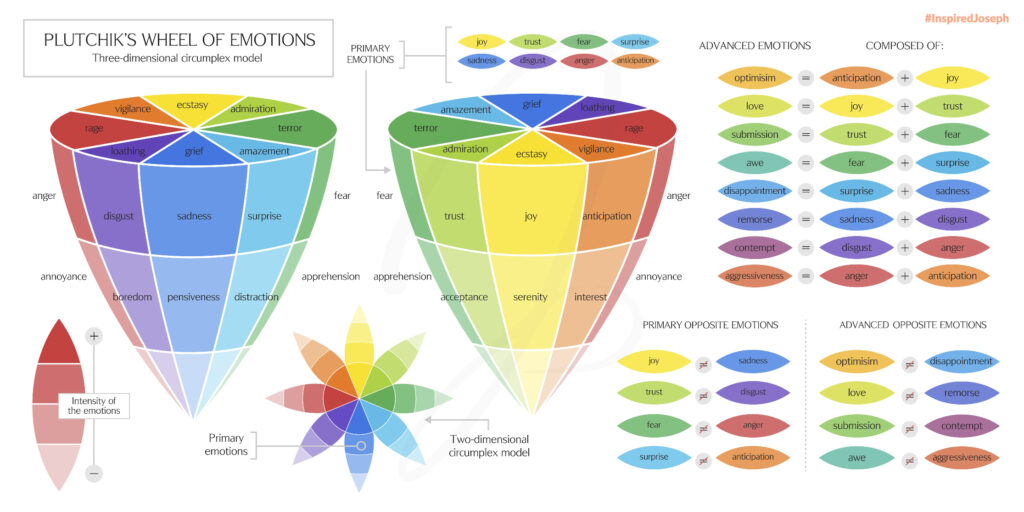
The Emotion Wheel: Everything to know The 8 core emotions by Robert Plutchik Can you define what emotions are you feeling right now? Have you ever had a strong emotion yet continued to struggle to come up with a means to put your thoughts into words? Perhaps you had a bad break up or had a bad news and are having problems digesting the combination of rage, sorrow, sadness, and other feelings you are experiencing. The Nature of EmotionsEmotions prepare us to react to actual or imagined environmental stimuli (e.g., being chased by a tiger or thinking that a boss is angry can produce fear, causing us to retreat). But what is the difference between an emotion and a mood? Emotions differ because they only last for a few seconds or minutes, while moods can last for hours or even days. In addition to eliciting a series of coordinated reactions, emotions also create a collection of such responses. Plutchik’s Emotion Wheel Robert Plutchik developed the Emotion Wheel as a tool to assist in the classification of human feelings and help in self-awareness and understanding. Recognizing the complexities of human emotion, Robert Plutchik developed the Emotion Wheel to aid in the naming and articulating of feelings. The Emotion Wheel uses color to show single emotions and combinations of emotions, color gradients to show how strong an emotion is, and shape to show how opposite or similar two emotions are. Based on his research, Plutchik concluded that there are eight basic feelings, each of which is associated with one of three fundamental colors. The highest level of each emotion is in the middle of the emotion wheel. According to the Britannica, an emotion is a complex experience of consciousness, bodily sensation, and behavior that reflects the personal significance of a thing, an event, or a state of affairs. (Definition Of Emotion) The Emotion Wheel Plutchik’s Emotion Wheel Dr. Robert Plutchik developed the Emotion Wheel as a tool to assist in the classification of human feelings and help in self-awareness and understanding. Recognizing the complexities of human emotion, Robert Plutchik developed the Emotion Wheel to aid in the naming and articulating of feelings. The Emotion Wheel uses color to show single emotions and combinations of emotions, color gradients to show how strong an emotion is, and shape to show how opposite or similar two emotions are. Based on his research, Plutchik concluded that there are eight basic feelings, each of which is associated with one of three fundamental colors. The highest level of each emotion is in the middle of the emotion wheel. The Emotion Wheel The foundation of Dr. Robert Plutchik’s emotions theory The following 10 postulates provide the basis for Dr. Robert Plutchik’s Wheel of Emotions: We share the earth with other species, both animal and human.The limbic system (also known as the midbrain) of humans and other animals (mammals) is quite similar. Both animals and humans share a set of foundational emotions. The Course of EvolutionEmotions developed as a byproduct of evolution, long before apes and humans existed. Questions of SurvivalThe ability of emotions to aid in our survival is undoubtedly the most important function they provide. Prototype ExamplesThese are the universally recognisable patterns and components that go into making up every emotion. The 8 Core EmotionsThe primary emotions are joy, trust, fear, surprise, sadness, disgust, anger, anticipation. CombinationsThe combination of these many different primary feelings will give rise to additional ones, uncolored emotions are those that are a combination of two basic feelings. Optimism, for instance, is the result of merging two emotions, such as anticipation and joy. Likewise, trust and joy make up love. The ability to discern when a sensation is a composite of two or more different experiences is useful since emotions are frequently complicated, some of which are detailed below: 7. Constructs Based on HypothesesEmotions are made-up ideas that help us understand what we’re feeling. 8. OppositesThere is a polar opposite for each fundamental emotion: Joy and Sadness Acceptance and Disgust Fear and Anger Surprise and Anticipation 9. SimilarityThe degree of similarity decides which feelings are more closely connected and which are opposed. 10. Intensity The cone’s vertical axis represents intensity; as one moves from the outside to the inner rim of the wheel, so does the intensity of one’s emotions. A deeper color indicates a stronger feeling. If we take anger as an example, the mildest form of that emotion is an annoyance. When anger reaches its peak, it transforms into a rage. Or, if left unchecked, boredom can turn into a feeling of loathing, which is dark pink. Regarding relationships, one law about feelings is essential to keep in mind: feelings may become more intense if they are allowed to build up uncontrolled. And it’s wise to strengthen your emotional vocabulary: it’s the foundation of being able to handle your emotions well. Because of this change in intensity, we can feel a wide range of emotions, from very strong (the inner circle) to not-so-strong (the outer circle). The Emotion Wheel Interpreting the Wheel of Emotions The 3 main features of the wheel: 1. The colorIn the Wheel of Emotions, each of the eight Primary emotions that Robert Plutchik identified has been assigned an easily identifiable hue. When the intensity of the feeling rises, so does the vibrancy of the color. 2. The layersThe Emotions Wheel has several tiers and degrees of both color and emotion. The intensity of both the emotions and the colors reaches its peak at the center of the Wheel.  Outer edges: Low-intensity emotions such as acceptance, distraction, boredom, and so on may be found around the outer margins. As you travel into the center, the color becomes darker, and the previously more subtle emotions become your real feelings. These fundamental feelings include trust, surprise, disgust, and others. You may find strong expressions in the middle circle, which include admiration, amazement, loathing, and other emotions. In the spaces between the spokes of each hue, you’ll discover something psychologists term “mixed emotions.” Contempt, for instance, emerges from a mixture of

What is Post-Treatment Distress? Cancer Survivorship

What is Post-Treatment Distress? Cancer Survivorship Coping strategies The race has only begun Why Post-Treatment distress matter? Having cancer might make you feel like you’re in a marathon with an end goal in mind. People with cancer may keep this metaphor in mind as they strive to overcome the obstacles posed by cancer. Nonetheless, just because someone completes treatment doesn’t indicate they’ve arrived at the finish line. Even after successful treatment, some cancer survivors feel haunted by their diagnosis. Others can still see the finish line but continue to race towards cancer. On the other hand, some might find that the finish line they reach is not what they imagined. And this is where the concept of acknowledging Post-Treatment distress for cancer survivorship comes in. It is where cancer survival comes into play. Understanding the post-treatment distress effect helps cancer survivors through the disease, being prepared and enabling them to live happy lives with the best quality of life possible. After finishing medical treatment, it’s normal to feel a sense of relief and hope that things will return to normal. But let’s say that this isn’t the case; now what? Post-treatment distress is defined as unpleasant anxiety, stress, or depression that may arise as a consequence of: Physical factors Emotional factors Social factors If you have difficulty getting used to life after treatment, contact us if you want to share with other survivors or mental health professionals.   I’m done with my cancer treatment. I just want to put cancer behind me. (From every cancer patient) Post-Treatment distress Emotional Stress after treament Cancer treatment impacts your physical health and alters how you feel, think, and enjoy your favorite activities. In addition to creating unexpected feelings, the therapy may change how the brain functions. Similarly to how you should care for your body following treatment, you should also care for your emotions. Each individual’s experience with cancer is unique, as are the reactions, emotions, and concerns accompanying it. How you understand and deal with cancer may be shaped by the values you were taught growing up. Some individuals may believe they must be strong and protect their loved ones. Others rely on the support of loved ones or other cancer survivors, as well as their religious beliefs, to help them manage. Some seek assistance from counselors and others outside the family, while others are uncomfortable with this approach. It is essential to make decisions based on what is best for you and not to compare yourself to others. Here are some frequent emotions experienced by cancer patients following treatment: Concern that cancer will recur (FCR) Feeling stress Feeling alone Depression & anxiety Feeling angry Concentration & memory Coping with physical changes Emotional Stress after treament Concern that cancer will recur (FCR) Worrying about the cancer returning (recurring), especially in the first year after treatment, is common. These worries may linger for an extended time, even after treatment ends. Some individuals’ anxiety levels are so severe that they stop enjoying life, sleeping through the night, eating healthily, and even keeping their follow-up appointments. “What will I do if I get it again?” one would wonder. “I never imagined I’d get through the first time.” Of course, not everyone reacts in this manner. There is always hope; as three times cancer survivor Joseph L. Wong would say: “Cancer is just a part of our life journey.” Many people who have overcome cancer say that their concern about a recurrence lessens and that they think about their condition less frequently as time passes. Some situations can cause you to worry about your health years after treatment has ended. Such things could include: Follow-up appointments. Celebrations of events & birthdays. (date diagnosed with cancer or had surgery or ended treatment or birthdays that reminds you of getting older) Family member’s illness. Similar symptoms were present when you first suspected cancer. Cancer-related mortality of others. And conversations with others that reminded you of the event you had endured.   How to cope and deal with these concerns. The worry of cancer returning is overwhelming; how do you deal with it? Below are some suggestions that have helped others face their fears and find hope: Know the facts.Taking the time to educate yourself about your cancer, the immediate steps you can take to improve your health, and the resources at your disposal can help you feel more in charge of your situation. Research has shown that patients who know about their cancer and its treatment have a better chance of adhering to their treatments and fully recovering. You should address negative emotions like fear, anger, and grief.Many people find that they are less worried when they can express themselves honestly and work through their feelings. Many have discovered that by verbalizing painful emotions like anger or depression, they are better able to release them. Others find it helpful to talk through their feelings with loved ones, others who have overcome cancer, or a professional counselor. You shouldn’t feel obligated to tell anyone about your cancer if you don’t want to. It is still essential to handle your emotions by giving them some serious thought and putting them in a journal. Work on developing a good attitude, which might help you feel better about your current situation.This method may require focusing on the positive, despite the circumstances, or choosing optimism over pessimism. Put your efforts into improving your health and doing all you can right now to avoid being sick. Try not to blame yourself for having cancer. Others attribute their cancer diagnosis to their actions or inactions. In most cases, this is not the case, and you shouldn’t give too much thought to your negative emotions. Remember that cancer can strike anyone at any time. You don’t have to maintain a constant state of positivity. Many people would like the option to act on their emotions whenever they please.  Find what works best for you to help you relax.It would help if you made time to do whatever enables you to relax. If you feel

Mental Health and Prostate Cancer

Mental Health and Prostate Cancer Prostate Cancer: What you should know What Is Prostate Cancer? When cells in the body start to grow out of control, cancer develops. Cancerous cells can develop from cells in almost any area of the body and then spread to other parts of the body. When prostate gland cells start to grow out of control, prostate cancer develops. Only males have the prostate gland. It produces some of the fluid that is found in semen. The prostate is located underneath the bladder (the hollow organ where the urine is stored) and in front of the rectum (the last part of the intestines). Seminal vesicles, a group of glands located just behind the prostate, produce the majority of the fluid needed to generate semen. The urethra, the tube that transports urine and semen from the body through the penis, passes through the middle of the prostate. Unfortunately, with men’s health, we don’t talk about it enough, and prostate cancer gets lost in the conversation. ( Eric McCormack ) Prostate Cancer Different types of prostate cancer An adenocarcinoma is the most common type of prostate cancer. These tumours arise from gland cells (cells that make the prostate fluid that is added to the semen).Other cancers that may arise in the prostate include: Small cell carcinomas Neuroendocrine tumours Transitional cell carcinomas Sarcomas These further types of prostate cancer are rare. If you are diagnosed with prostate cancer, it is usually always adenocarcinoma. Some prostate tumours grow and spread rapidly, but the majority develop slowly. In reality, autopsy examinations reveal that many older men (and even some younger men) who died of other reasons had prostate cancer that did not manifest during their lifetimes. In many instances, neither they nor their physicians were aware that they had it. Additionally, prostate cancer is classified by its rate of growth. It has two kinds of growth. (Fast-growing) aggressive or rapidly expanding (Slow-growing) non-aggressive or developing slowly With prostate cancer that is non-aggressive, the tumour develops slowly. However, with aggressive cancer, the tumour may spread to other regions of the body, such as the bones, and become metastatic. Prostate Cancer Symtomps Certain types of prostate cancer are nonaggressive, therefore you may not have any symptoms. However, advanced prostate cancer is often accompanied with symptoms. If you experience any of the following signs or symptoms, contact your doctor immediately. In addition, other disorders, such as benign prostatic hyperplasia (BPH), may cause some of the symptoms of prostate cancer, so you should see your doctor for a complete diagnosis. Symptoms of prostate cancer may include urinary and sexual issues, as well as discomfort and numbness. In its early stages, prostate cancer may not produce any symptoms.More advanced prostate cancer may produce the following signs and symptoms: Difficulty urinating Reduced force of the urine stream Blood detected in the urine Blood inside the sperm Bone discomfort/pain Weight loss without effort Erectile dysfunction Prostate Cancer Issues with Prostate Cancer Urinary issuesBecause the prostate is situated underneath the bladder and surrounds the urethra, urinary issues are common. Due to its position, a prostate tumour that develops and presses on the bladder or urethra might create complications.Urinary issues may involve: The urge to urinate often  A slower or weaker-than-normal stream Urinary bleeding Sexual issuesA dysfunctional erection may be an indication of prostate cancer. This condition is often known as impotence, making it unable to get and maintain an erection.Additionally, blood in the sperm after ejaculation might be a sign of prostate cancer. Pain and a numbing sensation issuesYou may feel numbness or weakness in your legs and feet. If cancer has progressed and is putting pressure on your spinal cord, you risk losing control of your bladder and bowel movements. Prostate Cancer Causes of prostate cancer and factors that put men at risk There is no known cause of prostate cancer; however, some risk factors, such as age or a history of the disease in one’s family, may raise one’s probability of having the illness. Who’s at risk?Although every man is at risk for developing prostate cancer, there are specific variables that significantly increase that risk. These potential dangers include the following: Age — Men under 40 have a low risk of developing prostate cancer, but that risk increases dramatically in their mid 40s. Men over 65 contribute to almost 6 out of every 10 new cases of prostate cancer. Family history — Some families seem to have more than one member with prostate cancer. It suggests that there may be a genetic or inherited factor in some cases. Still, most men who get prostate cancer don’t have a history of it in their family. Men are more than twice as likely to get prostate cancer if their father or brother has it. Men are more likely to get the disease if their brother has it than their father. Men with many family members who have had cancer have a much higher risk, especially if their family members were young when the cancer was found. Certain ethnicities or races — for instance, African Americans are twice as likely as people with European origins to get prostate cancer or die from it, and the disease is more aggressive when it is discovered. Asian American men, on the other hand, have the lowest rates of getting prostate cancer and dying from it. Obesity — Obesity (overweight) does not seem to raise the overall chance of developing prostate cancer. Some studies have shown that obese men have a lower chance of getting a low-grade (slow-growing) form of prostate cancer but a higher chance of getting a more aggressive (fast-growing) form. There is no apparent reason for this. Some studies have also found that obese men may be more likely to have more advanced prostate cancer and die from it, but not all studies have concluded. Genetic changes — Several changes (mutations) in genes that are passed down seem to raise the risk of prostate cancer, but they probably only account for a small

Could It Be Bipolar Disorder?

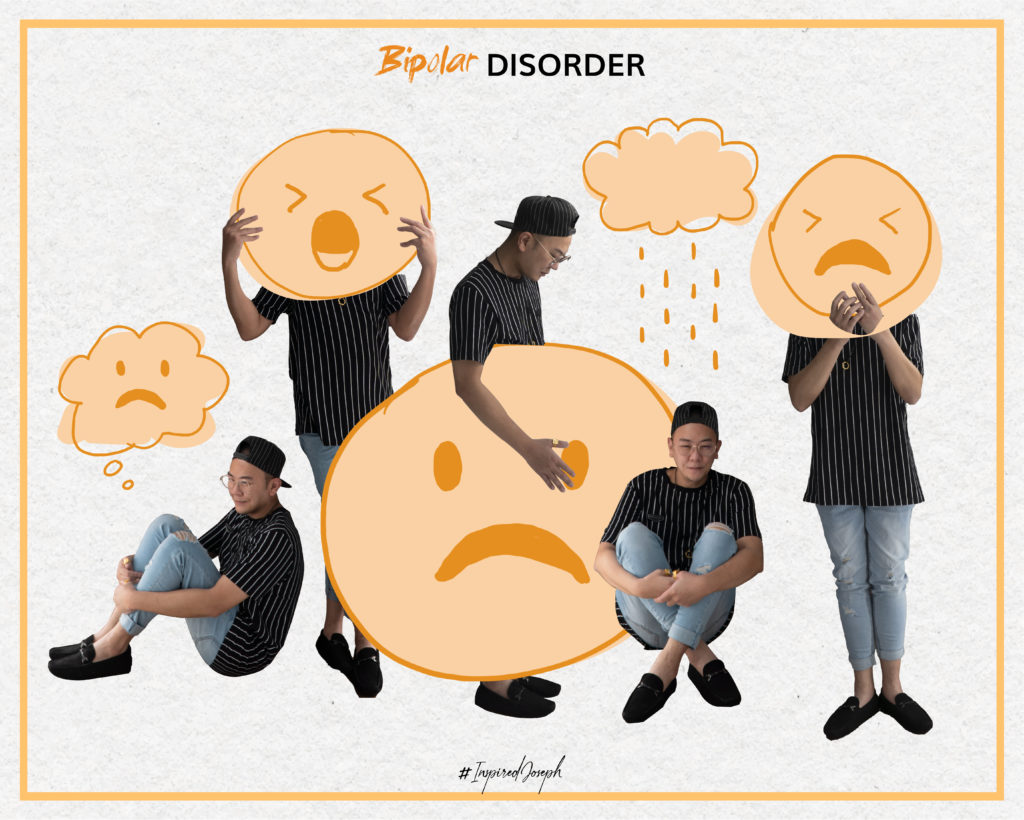
Could It Be Bipolar Disorder? What is bipolar disorder Bipolar Perhaps you’ve heard the term “bipolar” applied to someone who is moody or has mood swings. However, this informal usage of the term differs significantly from bipolar disorder, which was previously known as manic depression. Depression is a significant mental condition that causes a person’s emotions, mood, and energy levels to fluctuate dramatically, from extreme lows to extreme highs. These shifts, however, do not occur moment to moment. They normally take place over a period of days or weeks.   Bipolar disorders come in a variety of forms, but they always have some characteristics. First, the poor moods are similar to those experienced by people with a related disorder, major depressive disorder, commonly known as unipolar depression. People with this disorder can feel hopeless and disheartened, and they may lack motivation. But, in addition to these lows, bipolar disorders differ from unipolar depression in that people can experience periods of high moods, known as manic or hypomanic episodes, depending on the severity of the disorder. In a manic state, people can feel energised, overly happy, or optimistic, even euphoric, with extremely high self-esteem. On the surface, these appear to be very favourable traits, but when someone is experiencing a complete manic episode, these symptoms can become dangerously excessive. A person suffering from mania may invest all of their money in a dangerous business enterprise or engage in unsafe behaviour. Individuals may have pressurised speech, in which they speak at a high tempo all of the time, or they may have racing thoughts and feel wired, as if they don’t need to sleep. Delusions of grandeur are common in manic episodes. They may believe, for example, that they are on a personal mission from God or that they possess supernatural abilities, and as a result, they may make unwise judgments without concern for the repercussions. Sometimes it takes an overwhelming breakdown to have an undeniable breakthrough (Joseph L. Wong) The extreme highs Symptoms of Bipolar Mania & Hypomania Mania is a term used to describe periods of high emotion and activity in people with bipolar disorder. Euphoria is a feeling of being “on top of the world” that can occur during a manic episode. Even if the context does not warrant it, they may be overly joyful or confident. This overabundance of passion may lead to unsafe activities such as excessive gambling or unplanned sexual encounters. However, the person is more likely to be irritable than cheerful. If others hinder them from fulfilling their desires, they may become enraged (even if said desires are likely to cause harm or pain). If the person has been using substances, irritability symptoms are more prevalent. Mania, by definition, interferes with a person’s capacity to work or sustain a relationship. The intense mood must persist at least one week and be present for the majority of each day to be classified as mania. A person must also have unusually high levels of energy or engage in goal-directed activity. Finally, three or more of the following symptoms must be present: Inflated ego and/or self-esteem. (Example: A person has delusions of grandeur, believing they are destined to rule the world.) Increase in goal-directed activity. (Example: A person begins building several inventions despite having no engineering knowledge.) Decreased need for sleep. (Example: A person wakes up after only 3 hours of sleep feeling completely rested.) Racing thoughts/flight of ideas. (Example: A person feels they are thinking faster than they can speak their ideas.) Pressured speech. (Example: A person may speak incredibly quickly, perhaps too quickly to understand.) Increased distractibility. (Example: A person cannot focus on a conversation due to faint background noise.) Reckless behavior(s) which may impact one’s financial, social, or physical wellbeing. (Example: A person spends their savings on a car they don’t need and normally wouldn’t want.) Hypomania is a milder form of manic behaviour or versions of mania. Hypomanic episodes are typically shorter, lasting four days or more. It has the same symptoms as the above-mentioned manic criteria. Hypomania, on the other hand, rarely stops a person from functioning on a daily basis. If a person develops psychosis or requires hospitalisation, their symptoms are considered manic. Basic Signs of Mania: feeling overly happy or “high” for long periods of time feeling jumpy or “wired” having a reduced need for sleep talking very fast, often with racing thoughts and rapid changes of topic feeling extremely restless or impulsive becoming easily distracted feelings of grandiosity, which is when you feel you’re very important or have important connections feeling as if you can do anything engaging in risky behavior, like having impulsive sex, gambling with life savings, or going on big spending sprees having a low appetite   the extreme lows Symptoms of Bipolar Depression Bipolar’s depressive phase is the polar opposite of its manic phase. Extreme melancholy, emptiness, or self-hatred are common feelings. They frequently lose interest or motivation in any task. Bipolar depression, like mania, can cause severe distress and damage. A depressive phase is defined by the same characteristics as major depression (MDD). Bipolar depression differs from manic or hypomanic depression in that it occurs alongside manic or hypomanic symptoms. Symptoms must be present for at least two weeks to be considered a depressed episode. At least five of the following symptoms will be present in a person suffering from bipolar depression: An empty, hopeless, or sad mood that is present for most of the day, nearly every day. Diminished interest or pleasure in activities. Changes in appetite or weight (weight may increase or decrease by more than 5% in a month). Changes in sleep (insomnia or hypersomnia). Fatigue or loss of energy. Psychomotor agitation (restlessness or other increased motion) or psychomotor depression (slowing down of movement). Difficulty remembering, making decisions, and/or concentrating. Excessive feelings of worthlessness or guilt. Recurrent thoughts of death or suicide. Basic Signs of Depression: Like mania, depression can cause other symptoms as well, but here are 10 of the key signs of depression from bipolar disorder: feeling sad or hopeless for long

How to break free and create the life you want

Break Free. Be You. Break free & create the life you want! Getting tired of the same day-in-day-out life? Are you feeling stuck in a rut or trapped in an endless loop but can’t seem to break free from it? It can be frustrating to hear about how to make your life great by doing things that you can’t necessarily do on a day-to-day basis because of your job and daily demands. Maybe you’re the breadwinner of the family, or maybe you have to fulfill plenty of responsibilities. You can live the life you truly want while still fulfilling your responsibilities and expectations. In this article, you will learn how to turn your life around and start living a fulfilling life. Scroll Down How do I break out of the Loop? Limitations are the things that keep us constrained inside a loop. They keep us stuck facing the same problems, having the same choices, and taking the same actions over, and over again. Some people got stuck due to circumstances, but for many people, they stay in the loop because it’s their comfort zone, where everything feels safe, easy, and certain. When you’re so safe in this comfort zone, you can’t find a reason to step out of it. The first essential step to breaking out of the loop is to work on the way you think. At Healing Hearts Center, #InspiredJoseph helps people shift their paradigms and consistently turn any limitation into an achievable opportunity. The following actions are extracted from our course and will help you break free from the loop and design the life you want. Comfort & Cozy Zone Almost everyone, even the most adventurous among us, has some version of a comfort zone. Maybe you follow the same routine at the gym, or you gravitate toward a certain type of person when it comes to dating. Or maybe you’ve been in the same job for ages, and just the thought of doing something else is enough to make you break out into a cold sweat. Whatever it is, a comfort zone, while comfortable, can be limiting—which is why stepping out of your comfort zone every once in a while can be a productive way to spark personal growth. Our Exercise Step 1. Find Our Hidden Opportunities In life, we will always have constraints of some sort. It’s us to decide whether they become our limitations. Every obstacle has a hidden opportunity. Instead of fighting them or resigning ourselves to them, see that there are two sides to every coin. So if we want to break free from where we are, train our minds to think of opportunities instead of our limitations, an opportunity is a turning point that can create a breakthrough. All we need is to get the right focus and know exactly what is limiting us right now, not anything in the past or future. For example:  Lisa is limited by her busy work schedule because it leaves her no time to spend with her family.   It stops her from having a close relationship with her husband and her children.  If only she could manage her time better, then she’d be able to spend more quality time with her family.  *See how limitations can be turned into opportunities? The last statement is the opportunity statement. Find Our Hidden Opportunities (Exercise 1) Now it’s your turn to come up with your opportunity statement: Write down … I’m limited by … [ the obstacle/constraint ] Because … [ why it’s a limitation ]It stops me from … [ the thing you want to do ]If only I could … [ the achievement ] then I’d be able to … [ the new possibility ] *Once you’re clear about what you truly want and know what’s stopping you, you’ll be more driven to move forward as you now have a direction on how to turn your limitations into opportunities. Also, this is when you can start to think about what you can do to achieve that. Our Exercise Step 2. Flesh out Ideas What We Can Do After realising our hidden opportunities, it’s time to come up with exactly what we can do about these opportunities, planning the progression towards what we want. Let’s take the mother’s opportunity statement “If only I could manage my time better, then I would spend more quality time with my family.” as an example; it helps her to reflect on what she can really do to achieve the goal:    ● Set a clear time to stop working    ● Discuss my workload with my manager    ● Schedule time to play with my son every day after work, or during weekend    ● Schedule date nights with my wife    ● No work during family dinner * See how many possible ways to achieve her goal with a clear opportunity statement? Find Our Hidden Opportunities (Exercise 2) Now, it’s your turn to reflect about what you can do to achieve what you want: Write down … I can …    ●     ●     ● Our Exercise Step 3. Restructure Your Lifestyle After brainstorming a checklist of things we can do to achieve our goal, create a concrete plan to make these things happen, invest our energy consciously. As the breadwinner for family or ourselves, it may be hard to fit all these new tasks into our busy lives. And so, reviewing our current lifestyle is necessary before trying to fit in anything new. At Healing Hearts Center, we have a course module that is dedicated to helping you master your time. One of the essential frameworks to help organize and prioritize time is the Superstructure Method. To help you start living your purpose, we can use a simplified version of the Superstructure Method: Review the roles you play in life and decide each role’s Must-Haves tasks, tasks that are critical to do. Without it, the outcome is meaningless. As you’re looking into your daily life activities,

What is your comfort zone?

What Is Your Comfort Zone “The comfort zone is a friendly, safe, relaxed, and reassuring psychological state. You will never change your life until you leave your comfort zone. Changes are in your comfort zone. It starts from the end. “ Before you continue, we thought you might like to download our Comprehensive Goals Setting Exercises for free. These detailed, science-based exercises will help you or your clients create actionable goals and master the techniques to create lasting behavior changes. “THE COMFORT ZONE” 01. COMFORT ZONE Feels safe and in control 02. FEAR ZONE Lacks of self-confidence Looks for excuses Effected by other people’s opinions 03. LEARNING ZONE Deals with problems and challenges Acquires new skills Extends the comfort zone 04. GROWTH ZONE Finds purpose in life Live the dreams Sets new goals Overcome obstacles A comfort zone is usually described as the zone in life in which individuals feel most comfortable, and it can be considered a mental rather than physical space. Clearly, physical aspects of comfort can influence where a person will be at ease, but usually, this is because these physical things are interpreted by the brain as safe. For example, an individual’s comfort zone might include defining sitting on their comfy couch at home as comfortable, and that individual could feel distinct unease if they have to do something else, like attend a party at someone else’s house in lieu of getting to be at home and spend time on the couch. This event might push a person out of their “zone.” Much of the reason comfort zones are concerned is because they become a reliable predictor for how people will behave or respond to situations, and they can be viewed as a stagnating element in people’s lives. Remaining inside a comfort zone that doesn’t allow for mental expansion or consideration of new ideas means people will stay relatively the same through life. Exterior factors are more likely to contribute to breaking down the zone barriers. Great tragedies or life changes may push people to change too. Leaving a comfort zone voluntarily is an opportunity for personal growth, and it doesn’t have to be caused by radical or challenging events. Marketing staff who head to work often find that they are asked to look for new ideas and interpretations, and those “minor forces” can push that marketing personnel to mentally expand zones and evaluate things in new ways. Leaving the comfort of homes changes the perception of comfort zones too. Goals Settings exercises often focus on this issue of learning how to stretch beyond defined zones to continue personal growth. Ultimately, mental comfort can be an enemy that keeps people from continuing on a path of change. Yet those that welcome stepping outside their defined zones may have a life of learning and development ahead of them.

9 Ways to live life to it’s fullest

9 Ways to live life to it’s fullest Have you ever felt that others didn’t understand your pain when they seemed to lead a happy life? You are not the only one who feels this, but the truth is that happiness requires work, and learning how to live the life to the fullest requires dedication and practice. People who smile in servings have experienced as much as those who cry, frown, and scream. They smiled about it and just  found the courage and strength to  enjoy life to the best of their ability. Life is short and we live only once. Learning to live your life to the fullest is an important step in getting the most out of your daily life. Here are nine ways you can try. 1. Decide what is important to you Whether it’s caring for your child, working hard on your career, writing new blog posts every day, or burning great pieces, how do you spend your time? Select the one you want. Your parents, friends, communities, and society in general all have their opinions, but after all, you are the only one who is there at every moment of your life. Do what makes you happy, and the rest will fall into place. This may not mean that you will find your perfect job if you are limited by education, location, or vacancies. However, we can pursue a hobby, or volunteer, that or the mentoring, you can continue whatever you want. 2. Take More Risks Sometimes there’s danger involved in life, but every reward carries risk with it. If you never take risks, you’ll never get anywhere in life, and you certainly won’t learn how to live life to the fullest.Staying in your comfort zone is the fastest way to become discontent. Without stepping outside what you’re already comfortable with, you will cease to learn and stagnate in both your personal and professional life. It may seem uncomfortable, but taking a risk is as easy as saying “yes” the next time your friend decides to go out instead of staying at home alone. That could mean going out on a blind date, buying a plane ticket to a new city, or pulling out the paint that had been hidden for years. People look back on their lives and regret the risks they didn’t take, so try something new  today and set more goals than you think are possible now. 3. Show Your Love to People You Care About Family and friends will always appreciate hearing that you love and appreciate them in everyday life. It will brighten a stranger’s day to hear a random compliment. If you like someone’s shirt, tell them. If you notice that they’re doing a great job not losing their temper while their kid screams in the supermarket, let them know.  If you have a romantic interest in someone, just go for it. There are a lot of ways it may end, and only one of them keeps them in your life forever. In the end, you may look back and wish you had asked them out. 4. Live in the Present Moment Your past is important to learn from. Your future is important to work towards. At the end of the day, though, the only thing that exists outside of your head is the present. In order to ground yourself in the now, you can practice mindfulness, which involves learning to live in the moment by noticing what’s around you, how you’re feeling, why you’re feeling that way, etc. Meditation can also help with this as it helps you get in touch with your thoughts and feelings.  Gratitude is another amazing tool for living in the present. Each day, practice gratitude by writing down three to five things you’re grateful for. You’ll be amazed and how quickly this helps place you in the moment and start to live life to the fullest. 5. Ignore the Haters No matter what you decide to do with your life, there will always be someone around to point out the many ways you’ll fail or what you’re doing wrong with each step you take.  Know that every winner loses, but not every loser wins. Successful people don’t start out successful. What makes them successful is that they keep pushing through failure. Next time you run into a hater, work on placing boundaries and practice self-love to build your self confidence and make it impenetrable to the outside forces trying to break it down. 6. Don’t Compromise Your Values If something doesn’t feel right, don’t do it. Don’t compromise on your internal code of ethics, as this will leave you feeling empty and full of regret.  Life doesn’t work like a movie. It’s filled with gray areas. Trust your instincts, and do whatever you want so long as you can look yourself in the mirror with appreciation and love. Setting priorities and goals in life alongside with your values. 7. Be Kind to Others Every day, you’ll see someone who could use help. While you may not be at a place to help them financially, offering a smile or a kind word can do wonders to help someone feel better about where they’re at in life. When others see you practicing kindness, they’ll also be more likely to do so, which can help everyone learn how to live life to the fullest. 8. Be open-minded Having an open mind is important for your growth. Just because you’re right about something doesn’t mean there aren’t other ways to look at it. Listening to ideas you don’t agree with or understand keeps your brain active and healthy. You’ll continue to learn as long as you stay open to difficult conversations. Don’t assume you know everything about another person, as they always have more to teach you.  9. Take Action for What Matters to You You’ll hear people say, “I had that idea,” every time you see someone create something great. Everyone had the idea for Facebook first. The reason Mark Zuckerberg